Showing posts with label Plotting. Show all posts

Sunday, July 19, 2009

The Plot Thickens...

Oh look! I'm late posting! That NEVER happens. *koff*

Bad Novel Girl. No cookie.

I'm do apologize, gentle and faithful readership (and fellow Girls), for my lapse. But you see, I'm hip-deep in...

...wait for it...

PLOTTING!

(Don't you just love how I can turn my delinquency on it's head and make it post-relevant? Heh.)

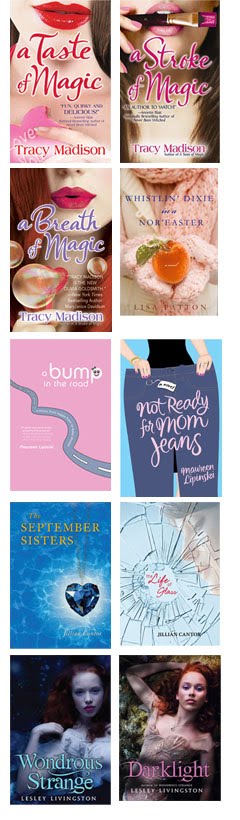
As you may know, my first book WONDROUS STRANGE was the start of a trilogy. It will be followed at the end of this year with DARKLIGHT (and here we must pause for a wholly gratuitous bit of horn-tooting, on account of the fact that I just received the okay to post my incredible cover art!):


Isn't it swoon-worthy? (And distracting in the extreme, I must say - I keep staring at it for long periods of time and not getting any writing done!)

Okay. So.

Right. Plotting. Or rather, plotting Book the Third. Which is a little different, I'm discovering. This isn't exactly like plotting a brand new book. It isn't even like carrying forth book one into book two.

Before I wrote WONDROUS, I have to admit, I was pretty much a "hey - let's see where this goes" kinda girl as far as my first drafts went. I didn't plot in advance. I still don't plot minutely in advance. Meaning, I don't have extensive outlines. But because I sold this series on spec, I did have to have some idea of where the story was going. (My publisher was curious, you see.)

Now that I have come to the third book however, things have changed. They'll do that. The story is still organic, after all. And, while it has mostly clung to the framework which I've set up for it in some places, in others, it's just gone on its own merry way - branching and blossoming in ways I hadn't necessarily envisioned. It's pretty cool.

But it does sort of mean that, to switch metaphors mid-steam, I've gotten to some places now that I didn't know I was going to. It means that now is the time when it would be handy to have a roadmap in the glove compartment. I have that - like I said, the publisher was curious. Only, by now, my map is a little out of date and missing a few place names. Fortunately, I've also managed to leave myself a trail of bread-crumbs, in the form of clues and hints and ivy-covered signposts throughout books one and two. The trick now, is going back and making sure I'm getting to where I'm going in a not-too-roundabout fashion.

Because Book the Third really IS where the plot thickens. But (and yet another metaphor switch - aw, hell - it's just metaphor soup at this point, okay? Go with me...) it's also where you really don't want it to calcify. You want to keep the story moving. But you also need to tie up all your loose ends and sneak in all that cool stuff that you only hinted at in two whole other books-worth of story. Plus there is all of the super cool-stuff you've learned and picked up and want to incorporate since those early days but you have to be judicious. You can't let the thing become top-heavy. It's a bit of balancing act. And I'll let you know when I get it just right. Heh.

In the meantime, I'm re-reading, taking notes, drawing diagrams, staring at walls, taking long hot showers, and trying not to get twitter-distracted. And yeah - I know. This post didn't answer a single one of your questions as to 'how'. Like I say - I'm less of a "seat of the pants" writer than I used to be... but there are times when the entire process is still a bit veiled in mystery. Even to me. Frankly, I kind of like it that way.

But it does make me late with my posts.

Thursday, July 16, 2009

Messy Plotting

Most of what I know about how to plot comes from movies, more specifically, a screenwriting class I once took. In screenwriting, there are two essential aspects to plotting: using three act structure and thinking about the central question of the story. In a three act structure, the first two acts each end with a turning point that works towards answering the central question (which is usually how something will happen over the course of the movie. In a romantic comedy, for instance, it’s almost always“How will the girl and guy get together?”) This all makes a lot of sense to me when I’m watching a movie. Then, I can break it all down in my head, the central question, the turning points, the acts, and the plot feels visible and easy to grasp. But do I use this when I write a novel? Not exactly.

I know I should, but when I’m writing, my mind just doesn’t want to work that way. It doesn’t want to organize, outline or try to plan ahead. Truthfully, I’m more of a character driven writer, so plot never comes easily to me, and there is generally no rhyme or reason to my plotting, at least in my first drafts. I almost always start a book with an idea, a specific scene, a few characters in my head. The inciting incident must be entirely clear to me before I begin writing. And then I just sort of go from there, figuring it out piece by piece, chapter by chapter, as I go along. Usually, I’ll have a vague idea of where the climax or second turning point of the book might be, and I’ll write towards that. But often, that idea changes as I go along.

Then when I’m finished with the first draft, and it’s time to revise, I try to go back to that screenwriting structure and think about my book in these terms. I read through the book and see if I can identify the acts and if the turning points are clear (or there at all). I figure out what the central question actually is and see if it’s answered by the end and set-up consistently throughout the book. On the very, very rare occasion, I find my book has fallen into place, with all of these things seemingly in tact. But usually that’s not the case, and I begin a massive revision. In fact, the majority of my revisions between my first and second drafts focus on plot rather than character development.

So I guess I’m a messy, disorganized plotter. But that isn’t always a bad thing. Sometimes I’ll write a scene that seems random, and then fifty pages later, it’ll make sense that that scene was actually crucial for setting up something later in the book. In other words, when I let what I'm writing simmer in my subconscious long enough, I have a strange way of figuring the plot out and getting it to all make sense. This is what I like to think of as a plot gift, and given my sometimes awful relationship with plotting, I take all of them that I can get!

Wednesday, July 15, 2009

It's the post in which I can't think of a catchy title . . . so there.

I tried, y'all. Really I did, but it's just not coming. On to the real subject.

Plotting. I suppose that's one of those topics that we writers definitely should be able to write about. Hmmm. As a fly-by-the-seat-of-my-pj's writer, I've been pondering just what to say . . . especially since my book is after all, plot driven.

I've been told that a commercial fiction novel is plot driven as opposed to character driven, the latter of which found in more "literary" novels. And since my book has been deemed commercial women's fiction, I'll take my literary agent's word for it. I'm a plotter at heart.

As for my own personal style, I have to think about said "plot" for a long while before my fingers ever come close to the computer. I'll jot down notes as I'm pondering my story. For the first book I even went so far as to break down the scenes by chapters and record exactly what I wanted to include in each. But that's only because I'd been thinking about the story for years before I ever endeavored to write it! Of course as I went along most of it got moved around. I was a cuttin' and pastin' fool. With any luck at all the editing on the book I'm working on now won't be quite as drastic.

For this one I don't have the luxury of spending years and years on how the story will unfold. Since my editor bought the sequel the same day she bought Whistlin' Dixie, I had to dive right in. (Just for fun, I set Dixie up for a sequel never ever thinking someone would actually buy it and need it a year later.) But happily, here I am now deciding which way it should go. I'm just going for it, although I've been trying to jot down ideas as I go along. Every now and then something magical happens . . . a scene starts writing itself. Of course I don't mean that literally, I'm just referring to that awesome place a writer comes to when her scene begins to unfold beautifully, despite any preconceived ideas of where it's suppose to go.

While writing Whistlin' Dixie, as well as my current WIP, I have known two things from the get-go. How the books will start and how they will end. It's the middle that keeps me in suspense. I'd love to give specific examples of what I'm talking about but, as we all know, Whistlin' Dixie in a Nor'easter has YET to debut. The Novel Girl caboose is still two and a half months away from publication and the sequel is still miles down the track. Until then I'm sure I'll be all over the place, cutting this and pasting that. I've decided that one just needs to find what works, stick with it and consider that her own rule of thumb.

Tuesday, July 14, 2009

Can You Hear My Editing Screams?

I just turned in a huge round of revisions on my YA book to my agent. And for the rest of the month, I'll be doing some pretty major edits to Book Numero Dos for my editor. You know what I've discovered this month? Plot is freakin' HARD!

Being more of character-and-voice-driven writer, plotting is something that doesn't come naturally to me at all. I have no problem picturing scenes in my head and my characters talk to me all day long, but trying to decide exactly where those scenes go in a book is somewhat of a challenge. I mean, it's not like there's a certain formula to follow or an understood roadmap other than--inciting incident, plot point #1, plot point #2, climax, etc. The intricacies of a plot are so much greater than the sum of any certain guideline.

So what this means is that I usually end up moving around my scenes during revisions--like little fictional puzzle pieces, trying to figure out where they make the most sense and still keep the story moving forward. Not to mention all of the hacking I have to do in the second draft. See, I don't outline; I usually just start writing. Usually, it takes me a few chapters to really get the voice down, thus delaying any kind of inciting incident. Thus, I usually end up having to severly cut down my beginnings. Because like 5 chapters of a character doing random things and internal monologue typically doesn't translate into a good book.

Although I can't say that I've really gotten a good grasp on plotting, I think one thing that's helpful is to chart out your main character's emotional journey--how his/her feelings, thoughts and actions change throughout the book. Then, use that as a guide for what goes where. For example, if your character has just gotten a fabulous new job and is thrilled with life, now's probably not the time for her to have the exhausted/frustrated fight with her husband, know what I mean? Use the emotional journey as the driving force in the book, and it will color all of the events and scenes.

Man, I really sound like I know what I'm talking about here, huh? Hopefully, I'll take my own advice as I do a serious machete job on this godforsaken book. And someday, maybe I'll improve my mad plotting skillz so that my second drafts don't involve so much headbanging and screaming.

Monday, July 13, 2009

Figuring out the Plot

Sorry for the late post today, folks. I've had an extremely busy day along with no internet until just about an hour ago. But I'm here now!

I've said it before, but I'm not a plotter. At all. I write by the seat of my pants and (usually) like it just fine. That being said, I obviously have *some* idea of plot before I begin writing...it's just not very in-depth or involved early on.

So while I don't have a fifty page mini-book of how the book will flow scene by scene, or even chapter by chapter, I DO have to have some type of a map. Basically, I spend some time deciding the following:

1. What is the opening? What is going to hook the reader?
2. What is the first turning point?
3. What is my midpoint?
4. What is my second turning point?
5. What is my climax? How does it end--what's the resolution?

By figuring out (the best I can) what the above points are in my works-in-progress, I then can let my pantser soul loose, and basically just play connect the dots.

I might not know how I'm going to get from the opening to the first turning point, but I KNOW I have to get there, and I know approximately WHEN I have to get there. It's like driving a car from point A to point B and so on.

Naturally, it isn't always an easy drive. Sometimes there are a ton of potholes on the way (with massive amounts of editing/scrapping/rewriting), sometimes I take a wrong turn and have to correct my path, and other times, well...let's just say it really isn't pretty.

But then there are the instances when everything zooms ahead, the story is blossoming, and everything just clicks. For me, the writing of each book is a mix of the bad, the good, and the excellent.

Regardless, the writing goes much smoother overall when I know where I'm headed, if not exactly the path that will get me there.

I'm heading off to DC this week, so I won't be around again until Monday. Everyone have a terrific week!