I have confession to make: I am not a good baker.
Sure, I can cook. I can roast a chicken, boil potatoes, steam vegetables, make complicated pastas and chili, and concoct a pretty good chopped spinach salad. But when it comes to baked goods, forget it. No matter how hard I try, I always manage to end up with a, let me say, oddly misshapen product.
Case in point: my husband’s birthday cakes. His favorite cake is pineapple upside down cake, and this is what he always wants for his birthday. Three years in a row, I managed to mess it up – and not just a little bit, but to the point of disaster, where I had to throw my hands up in the air, throw the “cake” away, and quickly try to order one from a bakery instead. Last year, I skipped the drama and just ordered it from the bakery from the get go.
On my last attempt, two years ago, the cake literally imploded. When I took it out of the oven, it was a concave mess, with a dip in the middle that looked like a bowl. Forget trying to flip the darn thing over (which was my undoing the year before, when the entire pineapple top stuck to the bottom of the pan and made a mess).
I’m not sure where I go wrong. I’ve the blamed the recipes – which have ranged from Internet finds to boxed mixes. I’ve blamed my oven. (Maybe it’s not cooking evenly?) I’ve blamed my husband’s taste in cakes – I mean, couldn’t he just like a simple iced vanilla cake? (But don’t get me started on the way I’ve messed this up, too. I don’t understand the way people actually get icing to look good?). Yet, I’ve also ruined brownies from mixes that turn mushy, Trader Joe’s Green Tea cake (Don’t even ask!), and cupcakes that have exploded out of their foil wrappers in the oven.
I did have one baking success, once. A few years back at Thanksgiving, I set out to make a dairy-free pumpkin pie from scratch that my then milk-allergic son would be able to eat. I diligently condensed my own soy milk, a task which required me to stand in front of the hot stove constantly stirring and boiling for nearly an hour. And despite the complaints from my family, (who know my track record and were concerned that their Thanksgiving pie would be ruined), the pie actually turned out really well. Tasty and beautiful enough to appear bakery bought.
So my husband’s birthday is coming up in less than two weeks, and I’ve been telling myself that I’m going to attempt the pineapple upside down cake one more time. I mean really, if I can write and revise an entire novel, I should be able to bake one silly little cake, right?
The only problem is, I need a pineapple upside down cake recipe. So, if anyone has a good one -- preferably one that is tested and guaranteed not to fall apart in the oven, send it to me. I’d love to give it a try. And if it all works out, I’ll post a picture of it here in a few weeks. [Actually, either way I'll post the picture -- the cake or the ruins!]
Wish me luck! I'll probably need it.
Thursday, November 13, 2008


Wednesday, November 12, 2008
My own cookbook?
Recipes are in the forefront of my mind today. And it’s not all because it’s our topic of the week. First off, we’re creating a recipe book at my day job. I work at a historic house here in Franklin, Tennessee and the staff is putting together a cookbook for visitors to take home as souvenirs. Some of the recipes are from long ago (the house was built in 1826 and is remembered today for the role it played as the largest confederate field hospital during the Battle of Franklin. If anyone has read The Widow of The South, by Robert Hicks, that’s the place!) The rest of the recipes are contemporary and it’s been fun to see the different tastes of so many of the people of Franklin who have submitted recipes. I never thought I’d assist in the authoring of a cookbook, but the opportunity happily presented itself. Hmm, I feel my own dreams of cookbook authorship bubbling to the surface!
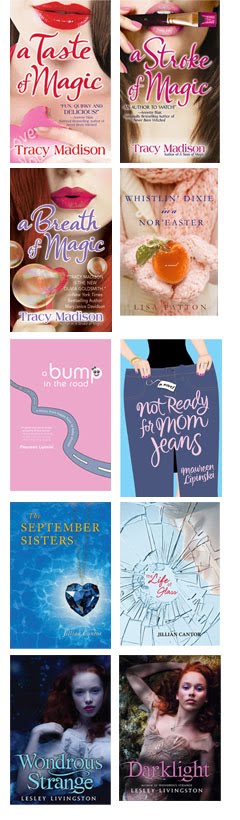
I’m thinking about adding a few recipes to my novel, Whistlin’ Dixie In A Nor’easter. A large part of the book takes place in Vermont, where my very southern heroine, Leelee Satterfield, owns a restaurant and inn. Incidentally, inn ownership was never her idea. It’s the brainchild of her narcissistic husband and Leelee reluctantly gives in to what she feels, at the time anyway, is her wifely duty. Having no restaurant experience whatsoever, Leelee is not only a fish out of water in Vermont but feels like an interloper within the walls of the 4 star commercial kitchen. To add insult to injury, the former inn owner – an extra-tall, mean German woman named Helga Schloygin - takes an immediate disliking to Leelee and ruthlessly schemes her demise. The cuisine at the Vermont Haus Inn, at least, is scrumptious and I hope to talk my editor into including some recipes from its menu.
When Leelee’s husband decides inn ownership is no longer the dream for him, he skips out and leaves her to work alongside the German spinster alone. That’s when she discovers her true grit and transforms the dingy Teutonic inn into a charming southern getaway in the mountains of New England. Leelee adds a southern bill of fare as a weekly special and changes the name of the place to The Peach Blossom Inn.
One of my literary heroes is Fannie Flagg. I love that she includes recipes in several of her books. Fried Green Tomatoes at the Whistle Stop Café spawned it’s own cookbook, the Original Whistle Stop Café Cookbook. I’m going to allow myself to dream that dream too - the publication of my own cookbook, Leelee’s Original Peach Blossom Inn Cookbook!
Tuesday, November 11, 2008
Evolution
Ah, recipes.
Six or seven years ago, I would’ve told you that I can’t cook and I’d never be a writer. Pizza, only interrupted by a brief interlude of boxed spaghetti, was the main staple of my diet. Cooking, although I was dying to start, just seemed like too much work, tons of effort and my brain couldn’t quite wrap my mind around the idea of meal-planning.
It was the same with writing. I knew it was something I wanted, but it seemed too big a concept, too scary, too…much. So, just as I dreamed about someday cooking the perfect pot roast or lasagna, I relegated my writing passions into dreaming about walking into a bookstore and seeing my name on the spine of a book.
But then, about three years ago, something happened. It was like I woke up. I started writing, without even really knowing where I was going or what I was writing about. My book started off as stream-of-consciousness humor; a collection of words that cracked me up. I didn’t care if it was good or not—I was doing it for myself. For my own catharsis.
Right around the same time, I started cooking. I would watch the food network with sponge-like absorption, salivate at Rachael Ray’s creations and then attempt to recreate them in my little apartment. I didn’t worry much about the quality at first, I was just proud to be experimenting. (Not to mention, it was just my husband and I, and I’m pretty sure he was just as sick of pizza and spaghetti and ramen noodles as me.)
Over the course of that same year, my book began to take form. It became an actual manuscript, with layers of subplots, character quirks and emotional depth. And my cooking did the same. I branched out from written recipes and added my own twists to dishes. It was in that year that I realized just how much I love to cook and how much I desperately wanted to be published.
Now, I come home from work each day and head straight into the kitchen. Cooking is my time to decompress from the work day and allows me to express my creativity in a whole different way. Then, when my son is tucked into his crib, I open up my laptop and write. Cooking and writing have become not just a hazy part of my life, but in the forefront. An essential piece to my sanity and mental clarity.
This topic is particularly relevant to me this month. After those years of fumbling through recipes and manuscripts, of screwing around with subplots and tweaking spices, I feel like I’ve reached an important peak: My book is coming out next year and this Thanksgiving, for the first time, I’m hosting my family.
I’m either reaching a fantastic, symbolic culmination in my life…or writing has officially made me insane!
Monday, November 10, 2008
A Spoonful of This and a Pinch of That
When I realized this week's topic was recipes, I paused for a second. Mostly because I wasn't sure if I wanted to talk about real recipes or writing recipes. BUT seeing how my debut book, A Taste of Magic, is about a woman who owns a bakery and then finds out she has magic--and that everything she bakes will now have a pinch of wishes-can-come true, well it just seemed that maybe that was what I should write about.
So I am.
Writing about writing recipes, that is.
Determining what "ingredients" need to be layered into a story (any story) can be difficult. Readers read a lot. That means they've seen just about everything, so for a book to really stand out, well--it needs to incorporate many different things in the right amounts, and told at the right pace. Of course, take any book and you'll find readers that love, love, love it and those that would declare it among the worst books ever written. So I guess, the first thing when planning the recipe for a book is to remember "You can't please everyone." Nor should any writer try.
Rather, they should try to find the right mash of ingredients to tell their characters' story in exactly the right way.
So, when I decided to write A Taste of Magic, I had a very vague idea. I wondered what it would be like for a woman who was still emotional/bitter from her divorce to the only man she'd ever loved (heck, ever dated, as their relationship began in high school) to have to bake his wedding cake to the woman he left her for. Ew, right? Well, "ew" was my thought anyway, but that's where the very beginning of this story clicked in my brain.
But when I began writing it...it was sooo heavy, and Elizabeth (my heroine) was not a heavy type of character. She was funny, and smart, and while she was dealing with a lot of stuff, she wasn't massively depressed. It was more that she was trying to figure out what went wrong AND trying to find her place in a world where she'd never dated. And trust me, this woman? She sooo wanted to date.
She also wanted to laugh, have fun, and feel sexy.
So out of nowhere the whole "magic" element came at me, and in that second, I knew I had the missing ingredient that would help me tell Elizabeth's story in exactly the right way. So I pushed up my sleeves and dug in. Layering in the humor, magic, and fun along with the very real emotions, wants, and confusion Elizabeth experienced wasn't always easy. Just like if you dump too much salt into--oh, say oatmeal cookies, the cookies might look perfect when they're baked, but they're not going to taste quite right.
But when you get the combination of ingredients just right in a story, it truly is magic...and with the help of my editor, A Taste of Magic is now exactly the way it should be. That doesn't mean everyone will love it, but that's okay, too. Because there will be people who click with her story, with the "recipe" I put together, and will walk away feeling like they read a totally terrific story.
And isn't that what we're after as writers? Sharing our stories?
At any rate, before I get more off track--each writer knows their characters, their story, and working to find the proper "recipe" to show it off to the best of their ability isn't always easy. But when it works...it's like feasting on the most decadent chocolate cake ever. Or, if you're not into chocolate--then whatever makes your tastebuds happy.
And now, as I write this, I've wrapped up the second book in the series, A Stroke of Magic, and am waiting to hear from my editor on what I layered right, what might need some work, and honestly? I can't wait to dig my hands in it again to make it the best it can be.
Saturday, November 8, 2008
Reviled Revisions
I guess I'm the exception when it comes to revisions, because I don't like them. When I have completed a story and have handed in my final draft, I have a hard time cutting and rearranging things, because it feels like I'm losing some of the content that I feel is vital to the story. That is not to say of course that I think my writing is perfect, far from it. I have always appreciated the discerning eye of my editor, and I usually happily accept all of his suggestions and make the necessary changes no questions asked. There have been times though, when he has questioned the tone or content of the story, and I have had to firmly stand my ground.
For example, here is one of those situations. The excerpt is from my new book, "How to Ruin Your Life and Other Lessons from the Fourth Grade" and what follows is an exchange between myself and my editor.
Even though I didn’t want to admit it, it was true . . . Katie was faster than me! She had beaten me during gym practice and she had even beaten me the next day at lunch. Though I probably could have beaten her, if Mr. Shepherd’s butt hadn’t got in the way. The whole thing was making me feel terribly sick. So sick, that I didn’t even feel like eating dinner. Instead, I went straight to my room and crawled into my bed. Mom came in to see if I was feeling okay. I told her that I was nervous about the race on Tuesday. She told me that I would do just fine and that her and dad would be proud of me no matter what. Mom is always telling me dumb stuff like that. I bet if I told her the whole world was going to explode she’d still say, “That’s okay P.J., things will be better tomorrow!”
Mom had only been gone a few minutes when Dad came into my room.
“Your mom tells me you’re nervous about the race on Tuesday,” he said. “Do you want to talk about it?”
“Not really!” I said, pulling my blankets up over my head.
“You know it’s normal to be a little nervous. Everyone feels like that from time to time.”
Why does my dad always ask me questions like “Do you want to talk?” or “Do you think I’m made of money?” or “Do I look like I was born yesterday?” and then when I answer him he ignores me, kind of like I never said anything at all. It’s weird.
“You’re not still upset about Katie?”
I didn’t answer him, because I thought it was better to be silent than to lie.
“You apologized didn’t you?”
I closed my eyes.
“P.J!” he snapped.
I looked out from beneath my blankets long enough to shake my head.
“Why didn’t you say you were sorry?” he asked.
“I was going to, but then Katie turned the whole class against me!”
“No one cares whether you win the race or not!” Dad said in his most serious voice. “I don’t know why you won’t believe me. Your mother and I have both told you that. We would be proud of you whether you win a medal or not."
Email from my Editor
Dad's orders to PJ to apologize to Katie (when PJ's parents first
hear of the dustup over the race) are still imperatives - we're telling you
to do this, and did you do what you were told. Are you sure you want to
leave them like this? It makes Dad seem a little hard-nosed.
My Response
I completely understand your feelings about the tone of Dad's response to Katie. I think what I am trying to get across is that PJ is a stubborn young girl. She is head strong and does things without thinking sometimes and her parents are very accustomed to her habits. I based much of PJ's family life on my own as a child. My mother was gentle, while my father just cut to the quick and told you what to do, but not in a harsh way. When I read the exchange between PJ and her father I don't think he comes across as rough. I think he appears realistic. As a parent there have been many times where I have told the children what to do, not asked them or encouraged them to sort it out themselves. If they have done something they know is wrong and are too stubborn to fix it, then there have been times where I have had to be firm with them. I don't think his being firm comes across as being hard-nosed.
That's an example of one of those times where I have had to disagree with my editor, though I must admit it's not too often that I do. Most of the time I take his suggestions and go with them. Who the heck am I to disagree with a man who has won literary awards and his been in the "business" almost as long as I've been alive.
Friday, November 7, 2008
"It's alive!" It's ALIVE!!"
"Er... yes... but it could really use a makeover before you let it out of the lab..."
Ah, the joys of revisions.
And like my fellow Girls, I really do mean that.
Remember back when I described my somewhat chaotic first draft process?
Yeah... see... my so-called first draft is anything but. On some pages, at least. On some pages, it is my forty-first draft. On others, my second or third. For the sake of clarity and ease, I call the completed creature that I hand in to my editor and agent for the very first time my "First Draft". But because I am constantly revising as I write, I don't refer to anything as "Revisions" until I get that puppy back in the mail, all zebra-striped with pencil marks and accompanied by that most marvellous of things, the "Editorial Letter".
Ahhh. My Revisions.
I'm just past that point with book 2 right now. The point in the process when I consider my revisions to truly begin and - oh mighty editrix! - all the heavy lifting has essentially been done for me.
When I sent the thing out, the story was complete. The bones and muscles and connective tissues in place, but I recognized that my creation would perhaps appear a bit... Frankenstinian. A monster with potential, if you will. Lumpy in places, a bit shambling, a few jagged seams showing, bad hair...
Laura and Jessica (editor and agent respectively) are like top-notch plastic surgeons in this case: they come in and do an in-depth consultation with me on where best to nip/tuck/clear-cut/hack/set-fire-to/rebuild-entirely...
Because, at this stage, they can see the entire shape of the creature whereas I am still zooming in on component parts. But once I have their notes, I am able to step back, gauge the body as a whole and get to work. Moulding, shaping, refining what's already there. I love this part. Love it. Love. It's the point where the Mad Scientist becomes the Artiste (sheesh... how far d'you think I can stretch this metaphor?).
The funny thing is that I almost always reconize, when I get to an edit, that I was aware when I was writing the thing that I would be making that edit. ("Right. I knew it was a bad idea to use the brain of an insane criminal...") I just needed someone to point it out.
Now granted, this is really only the second time I've gone through this process with the kind of heavyweight input that I get from Wunderteam L/J, but it sure beats the heck out of doing it by myself!
The end result is far more pleasing to the eye.
And less likely to be chased out of town by a pitchfork-and-torch-weilding mob.
Thursday, November 6, 2008
A Collaborative Process
The first time I ever really thought about revision, I was a sophomore in college. I’d signed up to be a peer tutor at the writing center, and in order to do so, I had to take a semester long class called “Peer Tutoring in Writing.” I thought it would be an easy class, and it got me out of taking the junior year general education writing course. I didn’t necessarily expect to learn anything about myself or my writing, but the truth is, this ended up being one of the most important classes I ever took because it, in essence, taught me how to revise.
It was 10 years ago at this point (Yikes! I feel a little old.), so I can’t tell you everything I learned in the class. But I remember being assigned to write different types of short papers and then spending weeks revising each one. We learned about looking at higher order concerns, such as focus and organization, before lower ones like style and grammar. And everything was about writing being a collaborative process – a phrase that I heard so much over the course of the semester that it may as well have been tattooed on my brain. I can still recall an hour I spent in the professor/writing center director’s office looking at a paper I wrote, where we literally discussed the wording of one paragraph the entire time. I know it sounds tedious, but surprisingly, it wasn’t. It was, in a word, enlightening. I’d never really thought to dissect my own writing in this way before or to discuss it in such detail with another person. I found it fascinating: the idea of envisioning and re-envisioning a piece of writing until it became the best possible piece it could be.
By the end of the semester, the revision switch had completely clicked in my head, and I haven’t been able to turn it off since. I could no longer write an essay or a short story (or a blog post, for that matter!) without later going back to mull over each paragraph, each sentence, each word. It is both a blessing and curse, if you pause to consider the many hours I have spent in the last 10 years obsessing over the way my words sound.
But the biggest way my English 250 knowledge has helped me, has been in my career as a writer. I can’t tell you the number of times I revised The September Sisters. Literally, I can’t, because I revised so many times, that somewhere along the way, I lost track. I revised it several times on my own before I ever sent it to agents. And then several times again after getting rejected by agents. And then again after a friend from graduate school read the manuscript. And then again after my agent offered to represent me. And then again after some editors rejected me. And then again when my eventual editor expressed some interest. (Remember my call story?!)
Admittedly, I got a little sick of the book. At a certain point, I wasn’t sure if I could ever even look at it, much less revise it, again. I joked to my husband (well, half-joked), that I could add a lovely Shakespearian twist and kill off all my characters in the last chapter. But the truth was, even at the height of my frustration I still completely understood that each revision had made the book stronger.
This post comes at an appropriate time for me, because just this week I am finishing up a revision of my second YA novel (which will be out in winter 2010 from HarperCollins). This time around, though, I’ve been lucky enough to have gotten wonderfully sage feedback from both my agent and my editor – something which has made the revision process a whole lot faster, easier, and more enjoyable for me.
A collaborative process indeed!
Subscribe to:
Posts (Atom)